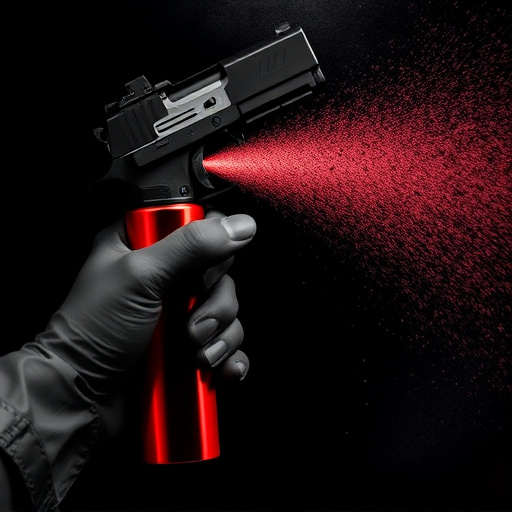
Riot control demands specialized tools for effective crowd management while ensuring officer and public safety. Pepper spray gel and stream differ significantly in their effects. Gel creates a lingering cloud, ideal for crowd control but causing prolonged irritation. Streams offer targeted disruption, allowing precise control without lingering effects. Gel's sticky consistency provides advantages over traditional streams, especially in chaotic environments. Stream sprays, popular for open spaces, have drawbacks like off-target effects and reduced impact on resistant individuals. Understanding these differences is crucial for law enforcement choosing the right tool based on specific riot scenarios. Future riot control focuses on non-lethal methods with advancements in pepper spray gel formulations and innovative crowd control weapons prioritizing minimal harm and public safety.
Riot control is a complex challenge for law enforcement worldwide, requiring effective tools to manage chaotic situations. This article explores two prominent options: pepper spray gel and stream spray, examining their unique properties, advantages, and disadvantages. By delving into these differences, we aim to provide insights into the most suitable riot control methods. Additionally, we discuss emerging technologies shaping the future of riot control, including advancements in non-lethal weapons and strategic deployments. Understanding the dynamics of these tools is crucial for navigating the delicate balance between public safety and crowd management during riots.
- Understanding Riot Control: The Need for Effective Tools
- Pepper Spray Gel: Properties and Advantages
- Stream Spray: Application, Effectiveness, and Disadvantages
- Comparing Gel vs. Stream: Key Differences Explained
- Future of Riot Control: Emerging Technologies and Trends
Understanding Riot Control: The Need for Effective Tools
Riot control is a complex challenge faced by law enforcement agencies worldwide, often requiring specialized tools to manage large-scale civil unrest effectively. In such high-pressure situations, the goal is not only to disperse crowds but also to ensure officer and public safety. This is where understanding the dynamics of crowd behavior and the right tools become crucial.
One common tool in riot control arsenals is pepper spray gel versus stream. While both aim to disrupt and incapacitate individuals through irritants, they differ significantly. Pepper spray gel, when deployed, creates a thick cloud that lingers, making it effective for controlling crowds but can also lead to longer-lasting irritation. In contrast, pepper spray streams provide targeted disruption, allowing officers to control specific individuals or areas without the lingering effects of gel. This distinction is vital in managing riots, as it enables tactical decisions based on the evolving situation’s demands, ensuring efficient and safe crowd control.
Pepper Spray Gel: Properties and Advantages
Pepper spray gel stands out from its traditional stream counterpart due to its viscous, sticky consistency. This unique property allows it to adhere to targets, ensuring a longer-lasting effect and making it more effective for crowd control in riot situations. Unlike streams of pepper spray that can dissipate quickly and blow back onto the user, gel formulations cling to skin or clothing, temporarily disabling individuals without posing a risk of cross-contamination.
The advantages of pepper spray gel are particularly evident in dynamic and chaotic environments where precise application is challenging. Its ability to coat and irritate the eyes, nose, and respiratory system makes it a powerful tool for law enforcement and security personnel. Moreover, recent advancements have improved the effectiveness and safety of these gels, making them a preferred choice over traditional sprays for riot control operations.
Stream Spray: Application, Effectiveness, and Disadvantages
Stream spray, a popular choice for riot control and crowd dispersion, is designed to temporarily incapacitate individuals through a powerful jet of irritants. Unlike pepper spray gel, which is typically applied directly to the face, stream spray forms a large aerosol cloud when activated. This makes it effective in open areas, allowing law enforcement officers to control crowds from a distance. Each can typically delivers up to 3 meters (10 feet) of continuous stream, providing a strategic advantage for maintaining order during demonstrations or civil unrest.
However, stream spray has its drawbacks. The wide dispersion can lead to off-target effects, affecting bystanders or innocent citizens caught in the path. Additionally, weather conditions like strong winds can significantly impact the spray’s effectiveness and range. Moreover, some individuals may be less susceptible to stream spray due to factors such as wearing protective gear or having a higher tolerance to capsaicin, the active ingredient in pepper-based sprays. This has prompted discussions about the suitability of stream spray as a primary riot control tool, with some experts advocating for a more targeted approach, especially in densely populated areas.
Comparing Gel vs. Stream: Key Differences Explained
In the realm of riot control and crowd management, pepper spray gel and stream are two distinct tools employed to disrupt and disperse aggressive gatherings. While both serve the primary function of incapacitating individuals through irritant agents, they differ significantly in their application methods and effects. Pepper spray gel, as the name suggests, is a thick, viscous substance designed to adhere to skin and clothing, causing a burning sensation and temporary blindness. This gel form often comes in canisters similar to traditional spray cans, making it convenient for officers to carry and deploy quickly. On the other hand, pepper spray stream offers a different approach by releasing a fine mist of capsaicin-laced solution from specialized nozzles or guns. The stream’s precision allows for targeted application, making it effective at longer ranges compared to gel.
When comparing Pepper Spray Gel Vs Stream, key differences become evident in their usage scenarios and impact. Gel is ideal for close-quarters combat where direct contact with agitators is necessary, ensuring swift neutralization. Stream, however, proves more versatile for crowd control at distance, enabling officers to manage larger areas effectively while minimizing potential harm from over-spraying. Understanding these distinctions is crucial for law enforcement agencies aiming to equip their forces with the most suitable tools based on specific riot control requirements.
Future of Riot Control: Emerging Technologies and Trends
The future of riot control is shaped by a continuous evolution in technology, with a growing focus on non-lethal methods that prioritize safety and minimal injury while maintaining crowd control. One notable trend is the development of advanced pepper spray formulations, such as gel-based varieties, which offer improved stickiness and longer-lasting effects compared to traditional aerosol sprays. This shift towards gel pepper spray, or what some call Pepper Spray Gel Vs Stream, could significantly enhance the tactical capabilities of law enforcement agencies, providing better control in challenging environments like urban riots or mass protests.
Beyond chemical agents, emerging technologies include advanced crowd control weapons that utilize sound and light waves to disorient and disperse crowds without causing physical harm. These innovative solutions are part of a broader trend towards more strategic, less harmful methods of riot control, reflecting a growing awareness of the importance of public safety and community relations in modern law enforcement practices.
In the realm of riot control, understanding the nuances of various tools is paramount. This article has explored two prominent options: pepper spray gel and stream spray, highlighting their unique properties and advantages. While pepper spray gel offers localized application and minimal environmental impact, stream spray’s wide reach and quick knockdown effect hold merit. Comparing these methods, we’ve unveiled key differences that shape tactical decisions. Moving forward, emerging technologies promise to revolutionize riot control, offering safer and more effective solutions. By staying informed about advancements like these, law enforcement can better navigate challenging situations, ensuring public safety and order.